FALL HEIGHT
Rated by a drop test
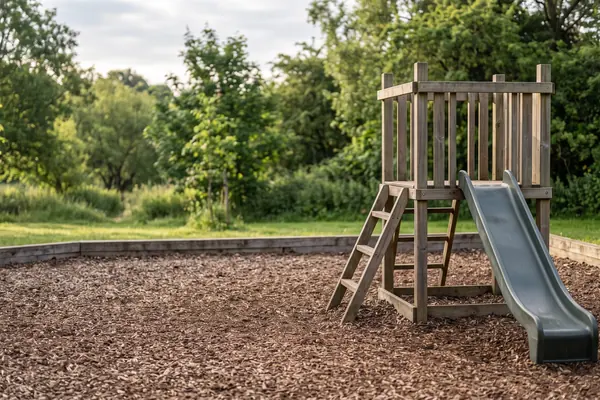
Surfaces are tested by dropping an instrumented headform onto them. The result is a critical fall height, which should match or beat the highest play platform.
Check a surfaceWHAT THE PLAY SAFETY GUIDANCE SAYS
The ground matters as much as the frame.
Falls are the most common way children get hurt on playground equipment. The surface underneath decides how hard a landing is, and guidance from the UK and US explains how it is tested, how deep it should be and why it needs topping up.
SOFT GROUND under every drop
THE SHORT ANSWER
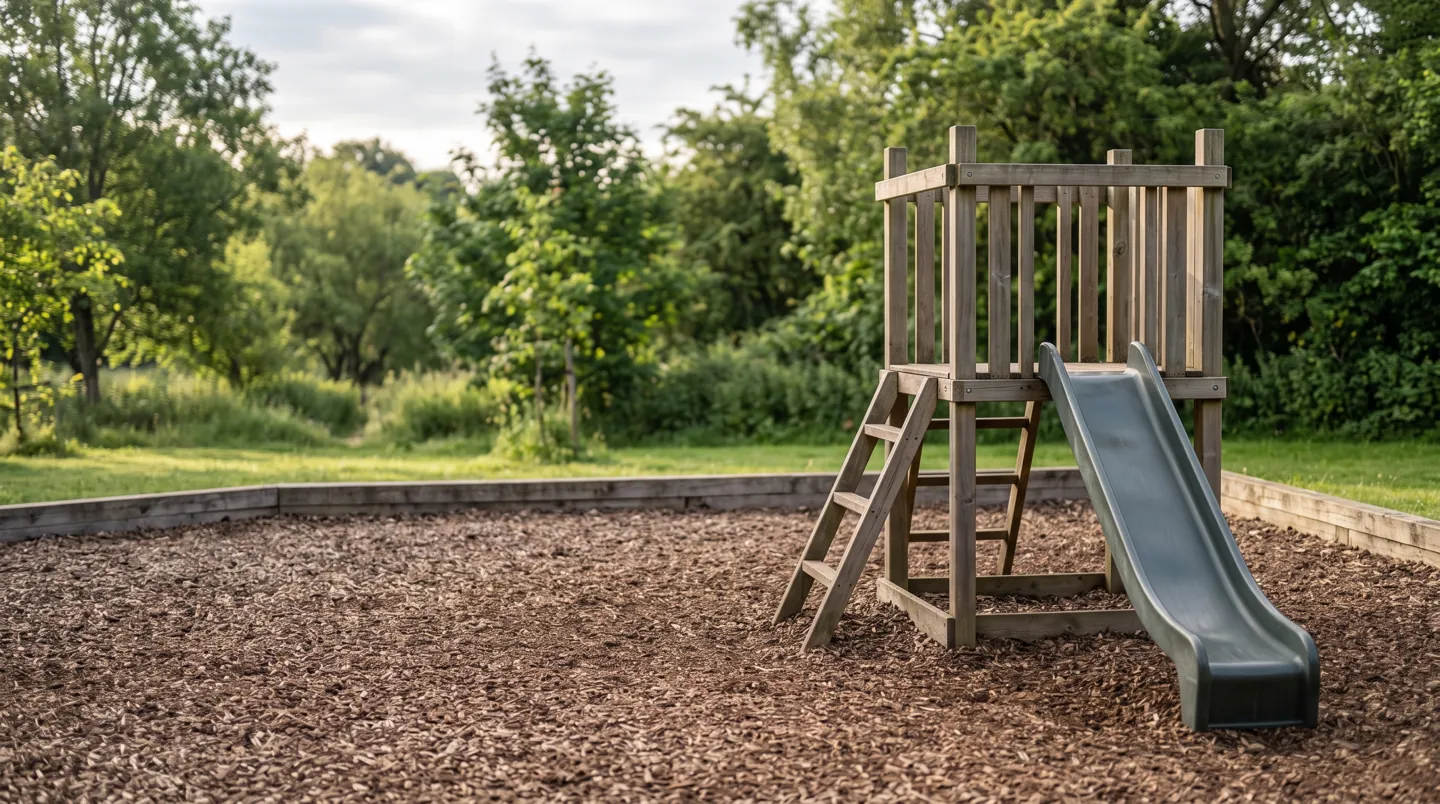
Surfaces are rated by how far a child could fall.
Loose ones only work if they stay deep.
FALL HEIGHT
Surfaces are tested by dropping an instrumented headform onto them. The result is a critical fall height, which should match or beat the highest play platform.
Check a surfaceUPKEEP
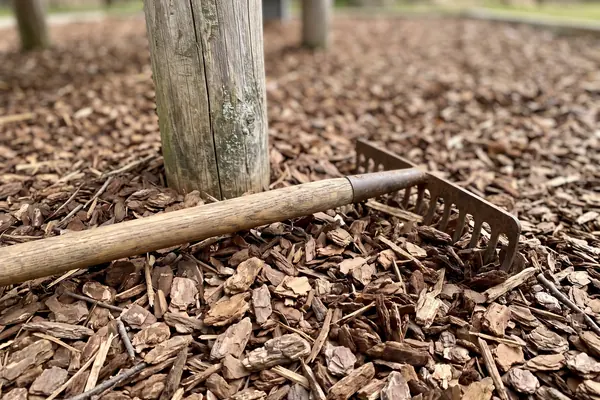
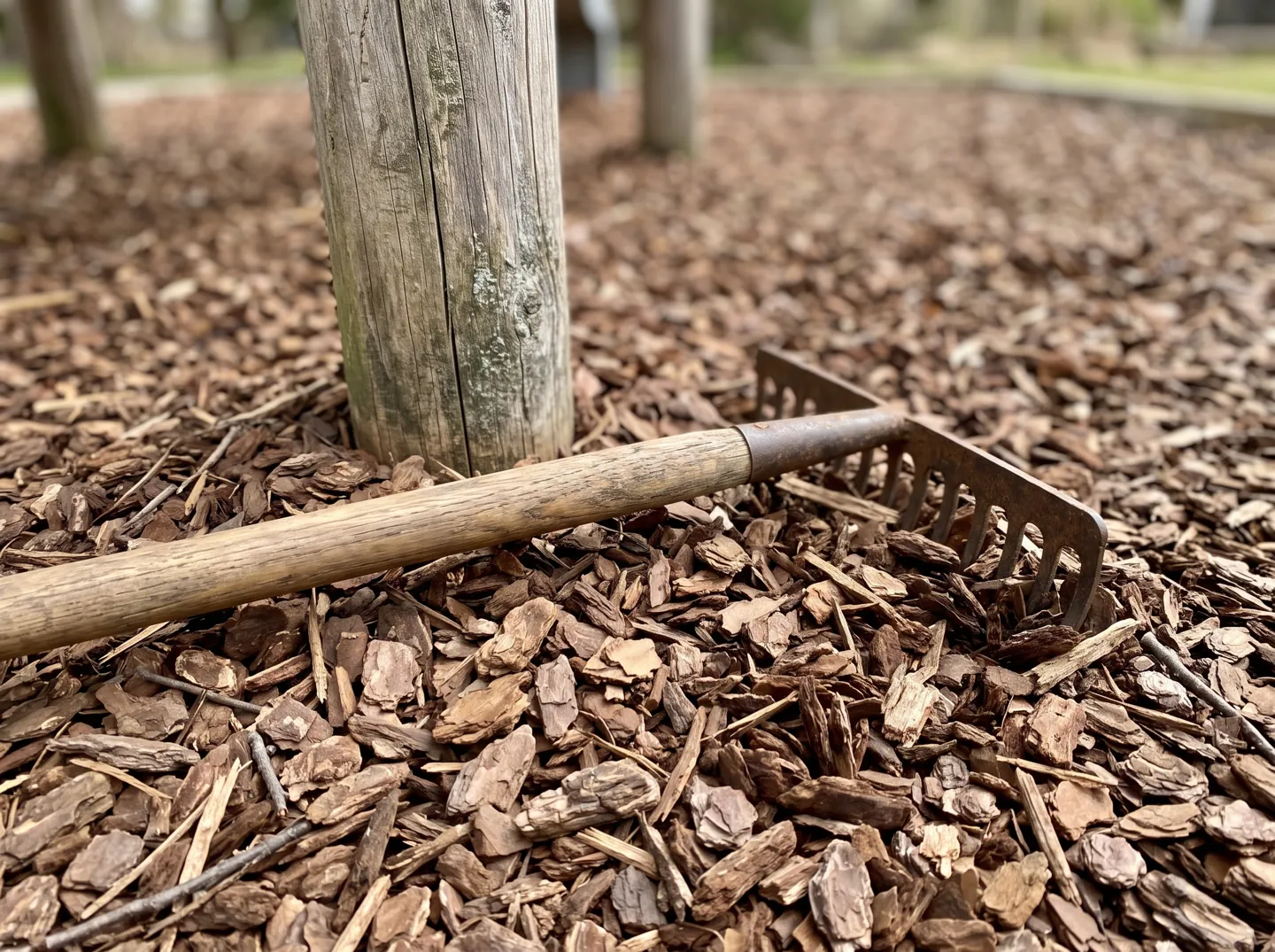
RoSPA Play Safety says inadequate simple maintenance is one of the most common causes of loose surfaces performing badly. Bark needs raking and topping up.
Keeping it rightHOTSPOTS
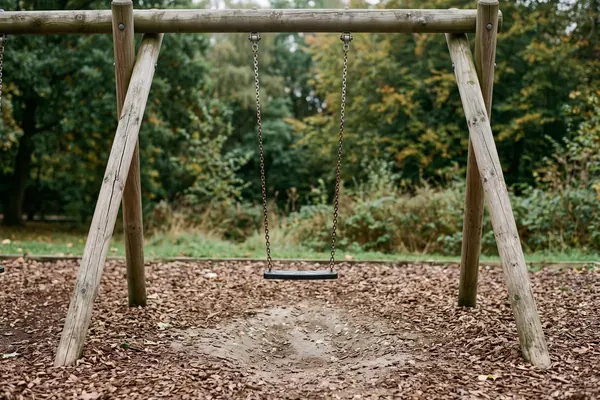
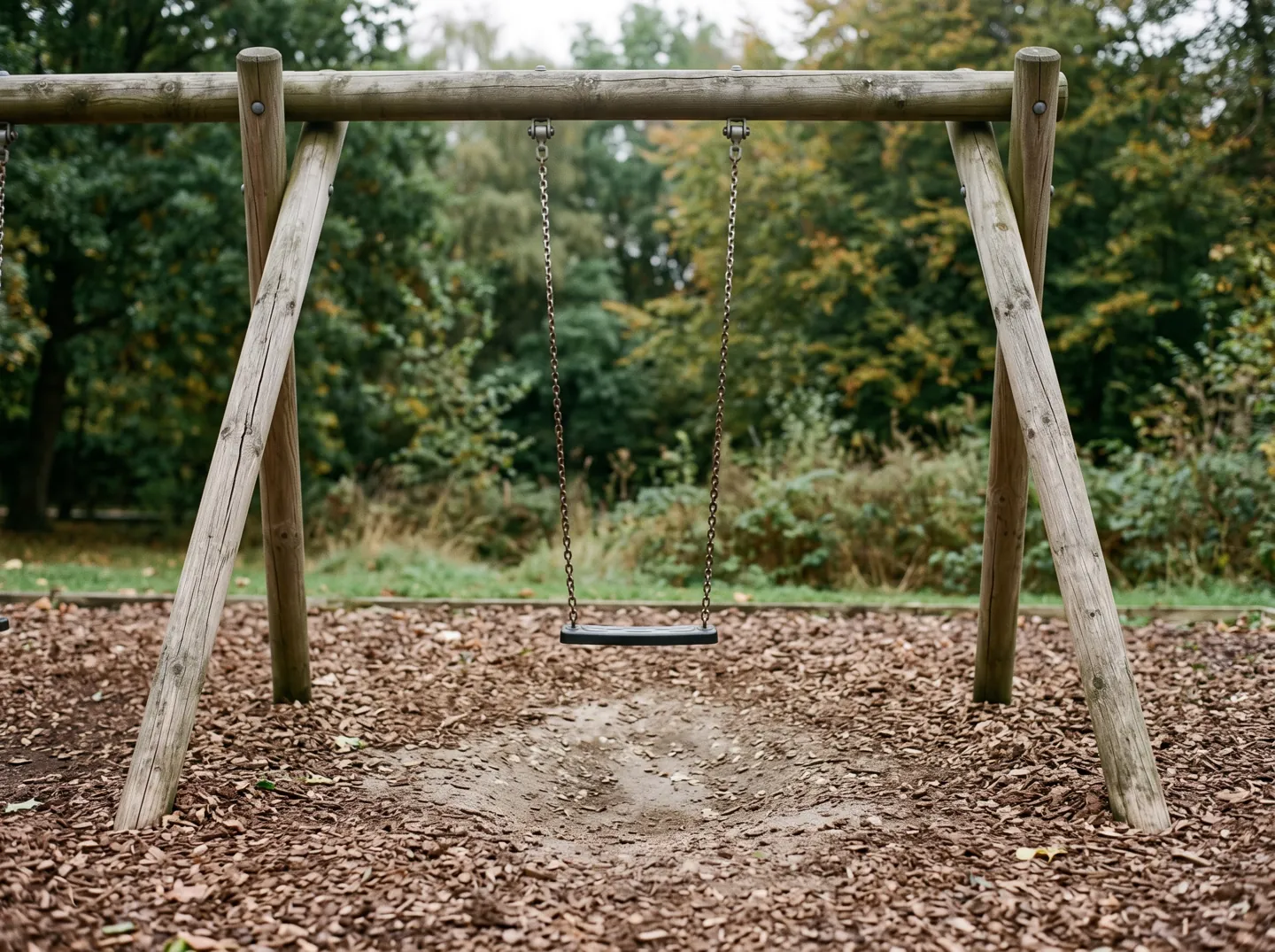
The US CPSC says loose fill gets kicked away most under swings and at slide exits, so those spots need special attention or wear mats.
See the numbersGeneral information only, not professional safety advice. If someone is in immediate danger, call the emergency services.
A QUICK SURFACE CHECK
Pick the surface you can see. The bar shows how far it falls short of the guidance for ground under raised play equipment.
Based on the US CPSC Public Playground Safety Handbook and RoSPA Play Safety guidance. This is general information, not a safety inspection.
TWO NUMBERS WORTH KNOWING
One figure on how children get hurt,
one on how loose surfacing settles.
44%
Share of playground equipment injuries from falls
In a CPSC study of 2,691 incidents reported from 2001 to 2008, falls were the most common hazard pattern, ahead of equipment problems such as breakage and tip-over at 23%.
INJURIES · US CPSC
≥ 25%
How much loose fill compresses over time
The CPSC says loose fill compresses at least 25% with use and weather, so a playground needing 9 inches of wood chips should start at 12 inches.
SETTLING · US CPSC
The CPSC also estimates more than 200,000 emergency-room-treated injuries a year on US public playgrounds. A shock-absorbing surface makes a serious head injury less likely, but it says broken limbs can still happen on any surface.
FOUR THINGS PLAY AREA KEEPERS DO
Most of the work is simple and regular. These points come from RoSPA Play Safety and the CPSC handbook.
RoSPA Play Safety cites a regime of daily or weekly visual checks, monthly or quarterly operational checks and an annual independent inspection.
For granular bark in areas of high play, weekly levelling with a rake is recommended, pulling material back into worn hollows.
The CPSC suggests marking equipment posts with the minimum fill level, so it is easy to see when the surface has sunk.
RoSPA Play Safety advises replacing supple spruce bark every third or fourth year, and budgeting to replace or screen sand every 6 to 8 years.
HOW THE TEST WORKS
The European test, BS EN 1177, measures the acceleration of a falling test head as it hits the surface. BSI's summary of the 2008 edition explains that a Head Injury Criterion (HIC) of 1,000 was used as the upper limit for injury severity unlikely to be disabling or fatal.
The current edition, BS EN 1177:2018, can be used in the laboratory or on site, and also for impact areas under outdoor fitness and parkour equipment. HSE adds a wider point: the goal of play provision is not to remove all risk, but to weigh risks and benefits.
Questions
It is the height a surface is rated to protect. The CPSC describes it as an approximation of the fall height below which a life-threatening head injury would not be expected, and says it should be at least the fall height of the highest equipment.
The US CPSC handbook does not count grass or dirt as protective surfacing, because wear and the weather reduce how well they absorb a fall. It also says concrete and asphalt should never be directly under equipment.
The CPSC says never to use less than 9 inches of loose fill, except shredded rubber, where it recommends 6 inches. RoSPA Play Safety describes a 300 mm layer of granular bark or graded wood chips.
It gets kicked away and settles. The CPSC says it compresses by at least 25% over time, and RoSPA Play Safety says inadequate maintenance is one of the most common reasons loose surfaces underperform.
It can be, if it is the right kind and well kept. RoSPA Play Safety suggests washed, screened sand with rounded particles of 0.2 to 2.0 mm, inspected daily in built-up areas because it attracts animals.
Sources
ABOUT THIS NAME
doodletikes.com is part of the DoodleSale portfolio. It isn't in an auction right now, but you can ask about leasing it.